
Every November, a familiar itch shows up. The retailers have decided it is already December, your employer wants benefits elections by Friday, and some corner of your brain whispers that you should probably Do Something About The Money before the year ends.
Good instinct. Wrong default. The year-end money rituals most people reach for are the ones that feel productive, and feeling productive is not the same as being productive. So here is the honest version of the year-end list: the handful of moves that matter before December 31, and the busywork you have my permission to skip.
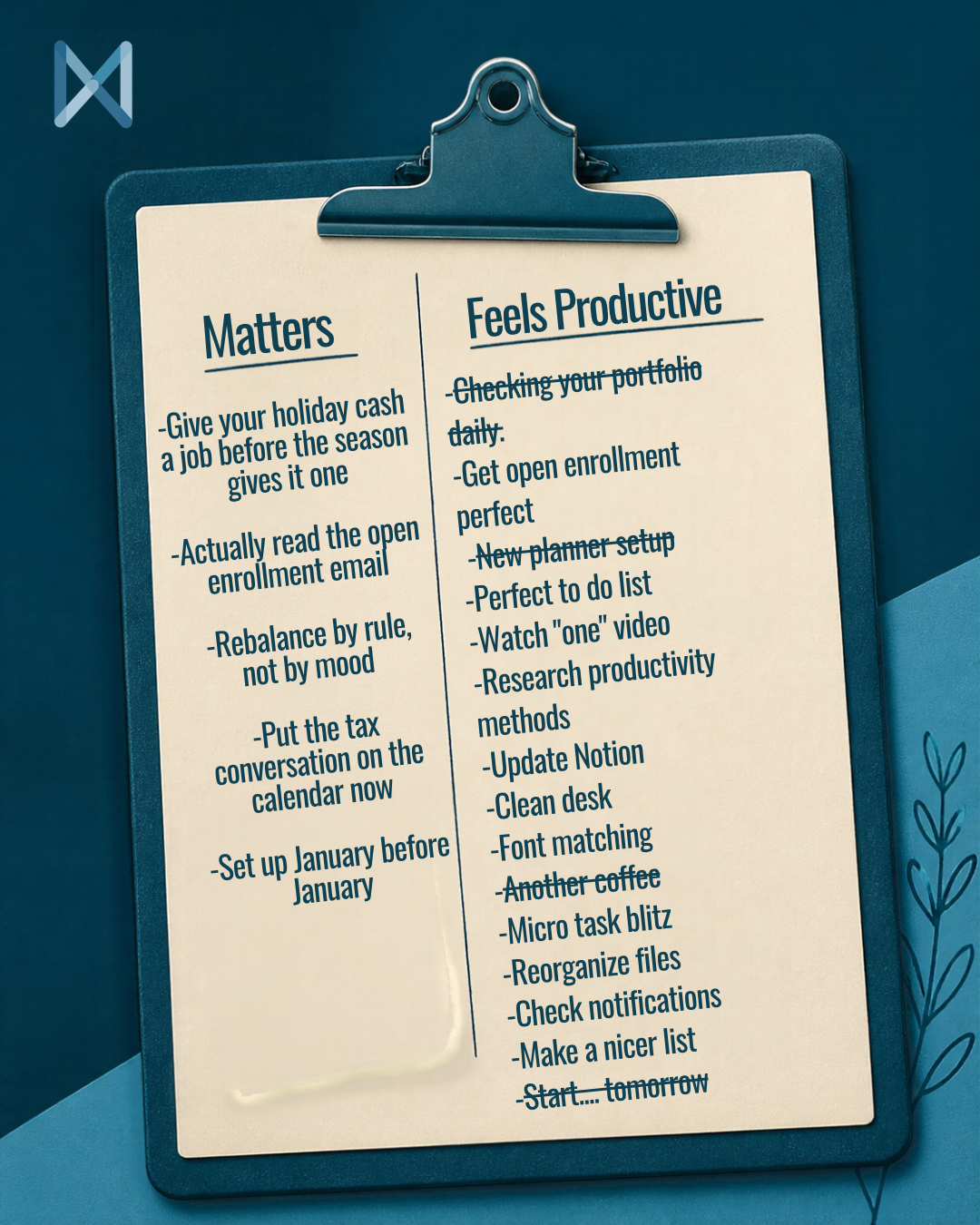
WHAT ACTUALLY MATTERS
1. Give your holiday cash a job before the season gives it one.
The gap between "we'll be reasonable this year" and the January credit card statement is not a willpower problem. It is a structure problem. Money without an assignment gets spent, usually in December, usually in ways you cannot reconstruct afterward. This is exactly the problem our partner platform Currence (livecurrence.com) exists to solve: your income lands in one central reservoir and gets routed by rules you set in advance, with a human coach involved in setting them. Decide what the holidays get to cost while you are calm. Then let the system hold the line while you are festive.
2. Actually read the open enrollment email.
November is benefits season, and the open enrollment email is the most skimmed important document in America. Health coverage, life and disability insurance, FSA and HSA elections: unglamorous decisions with real consequences, and they expire on a deadline whether or not you read past the subject line. While you are in there, check the beneficiaries on your accounts and policies. Life changes. Forms do not update themselves. We review insurance as part of planning for a simple reason: a portfolio cannot do its job if one uninsured bad week can undo a decade of saving.
3. Rebalance by rule, not by mood.
If your plan calls for rebalancing and your allocations have drifted, do it. Rebalancing is wonderfully unexciting: you trim what has grown past its target and add to what has fallen behind, per the plan, on schedule. Not because of headlines, not because of forecasts, and not because of how this year felt. Because the rule says so. Rules you set in calm moments are the whole point of having a plan; December, with its noise and its year-in-review retrospectives, is exactly when they earn their keep.
4. Put the tax conversation on the calendar now.
Charitable giving, retirement contributions, and other year-end tax items come with hard deadlines, and your tax professional's December fills up faster than a Costco parking lot on a Saturday. We do not give tax advice. We do insist the conversation happens before the window closes, and we are glad to coordinate with your CPA so nothing falls between the two of us.
5. Set up January before January.
Here is a prediction I am comfortable making: in about eight weeks, millions of people will resolve to get better with money, and most of those resolutions will be gone by Groundhog Day. Resolutions are a plan to rely on willpower, and willpower is precisely what January does not have in stock. Systems do not need motivation. If the structure is built in November, January is just another month your plan already handles.
WHAT JUST FEELS PRODUCTIVE
Now for the other column. Checking your portfolio daily in December: the checking changes nothing except your blood pressure. Reading next year's market forecasts, which, as a reminder, nobody ever goes back and grades; the pundit who missed this year will be back in January with fresh conviction and the same chair. Repositioning around headlines, which mostly converts anxiety into transaction activity. And chasing whatever fund won this year, which tells you exactly one thing: it won last year.
The quiet secret of year-end planning is that most of it is maintenance, not heroics. Broad global diversification, rules set in advance, cash flow with assignments, insurance that fits the life you actually have. Boring. On purpose. Boring is what lets you enjoy the pie.
If you want help sorting your own list into the two columns, book a Discovery Call at discovery.inbundance.com. Bring the whole pile. We will tell you which items matter, which can wait, and which were never really about money in the first place.
Corey Kaster, LUTCF is an Investor Coach and founder of Inbundance Wealth Management in Portland, OR
Investing and financial planning involve risk, including the possible loss of principal. You should consult a qualified financial professional before making any financial decisions.